
if they don’t get it, more detail won’t save you.
I was working on a script with a weighty scientific focus and I found myself wondering “Shall I just add a bit more detail here?”
It already made sense. I’d landed the point. But there was that irritating inner dialogue, the self-questioning. “Should I add more? There’s so much more. This topic is huge!”
It’s easy to be consumed by the detail and working with clinical and pharmaceutical experts is a delicate dance. Scientists, as a breed, are studious, cautious, precise. (If a group of owls is a parliament, I’m calling it a caveat of scientists.) They say exactly what they can stand behind, no more, no less. No overclaiming and everything goes through legal.
For very good reasons.
But here’s the tension: most audiences aren’t scientists.
And the audience and their expectations, their context, their emotional state quietly dictates whether something lands or gets lost.
Because non-experts don’t need more detail. They need something to hold onto.
That’s why metaphor does so much heavy lifting. (From the Greek metaphorá “to carry across.”)
It takes something complex and carries it into familiar territory.
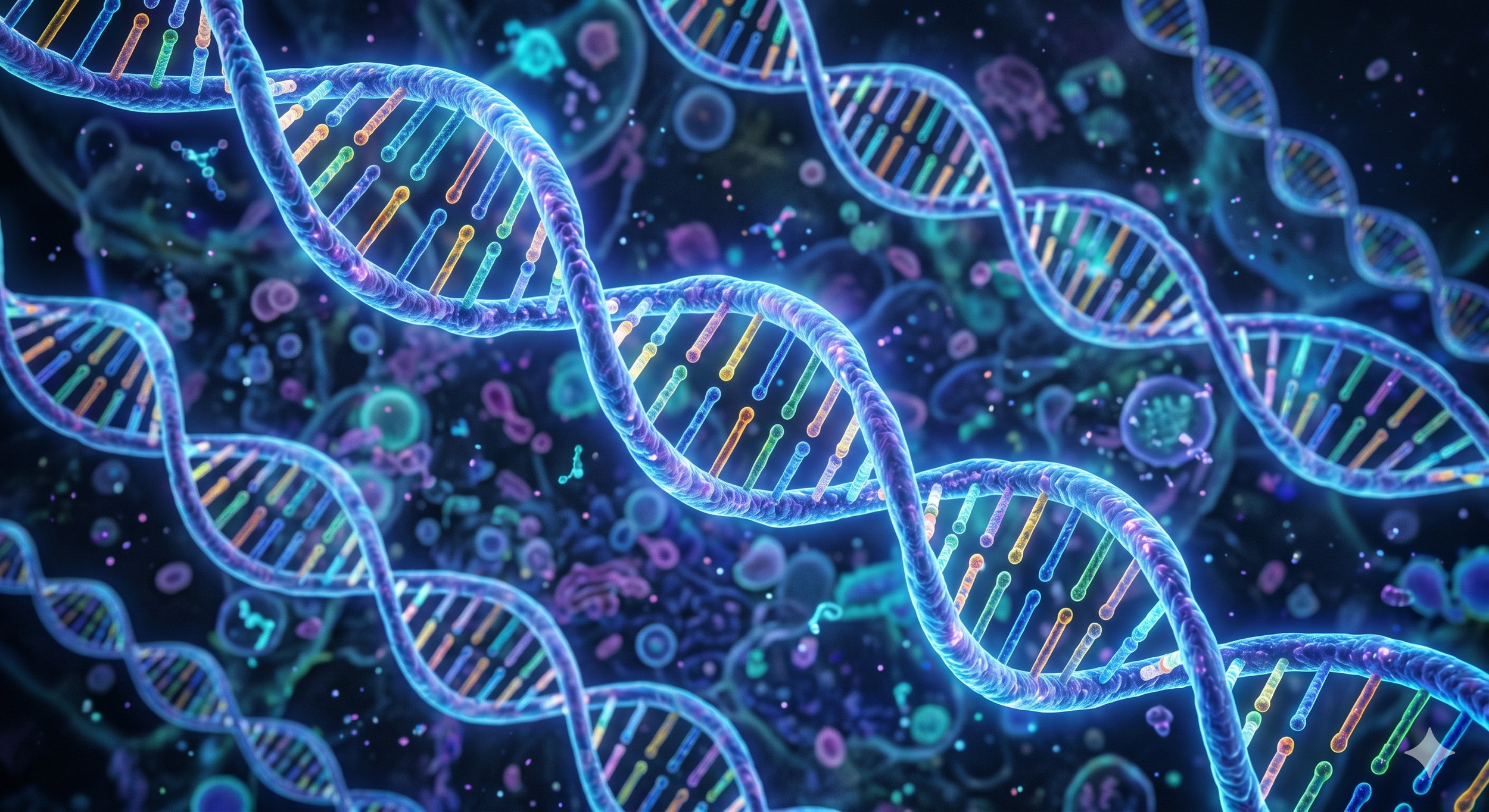
Gene therapy, for example. Describe it in full technical detail and you risk losing people halfway through the first sentence.
But call it a “molecular pair of scissors”, a precise editing tool that cuts out a typo in DNA and replaces it with the correct spelling and suddenly, people can see it.
Who doesn’t have scissors? You’ve got scissors. I’ve got scissors. They’re definable, solid.
And that’s the point where communication starts to work.
The risk, of course, is what happens next.
We get nervous. We go back in. We add the layers, the qualifiers, the backup detail, until the clarity we created gets buried under the weight of everything we could say as well.
It’s the same problem fine artists have.
There’s a line often attributed to William Merritt Chase that artists need to work in pairs: one to paint, and one to kill the painter before they ruin it.
Because the danger isn’t starting. It’s not knowing when to stop.
It’s not about simplifying science. It’s about choosing the right bridge into it and having the discipline to stay there.
Because words, chosen well, let us paint pictures in the mind. And pictures create emotional responses.
And those responses shape how we feel, what we trust, and ultimately, how we live with the information we’re given.
Clarity isn’t just about understanding. It’s about how something makes us feel and how we feel affects how we carry ourselves through life.
Sally Nettleton - Co-Founder & Director, We Are Toucan.
